The brief: help every candidate find their place
A career in the Royal Navy can change a life. Friendships, skills, adventure and experiences that last a lifetime. Sounds great. The hard part is getting the right people to that conclusion, and through a recruitment journey that can take six to twelve months.
The Navy faced high recruitment targets, fewer face-to-face conversations and fierce competition for talent. The pressure is real: in 2023–24, the Royal Navy recruited 2,450 people against a target of 4,040. And across the Armed Forces, the median time from application to entry for Regular recruits was 249 days in the year to July 2025. That's a long time to keep a candidate interested.
There was a diversity challenge too. The Navy wants its people to reflect modern Britain. But the groups it most wants to recruit more of, such as women and people from ethnic minorities, are often the most hesitant to sign up. They need more encouragement, and more answers, before they take the plunge.
So the brief was clear: give every candidate instant, personal answers at any hour, take the pressure off the live chat team, and free human recruiters for the conversations that really need them.
“Solutions like our new AI Virtual Guide allow us to communicate in a 1:1 way for our website visitors, delivering the right content, to the right person, at the right time. This complex project has been a brilliant collaboration between our partner agencies. And we’re only at the start of an exciting roadmap. Our ambitions for this solution are long-term, and I look forward to seeing its capabilities developing over time.”
What we built: the Royal Navy Virtual Recruiter
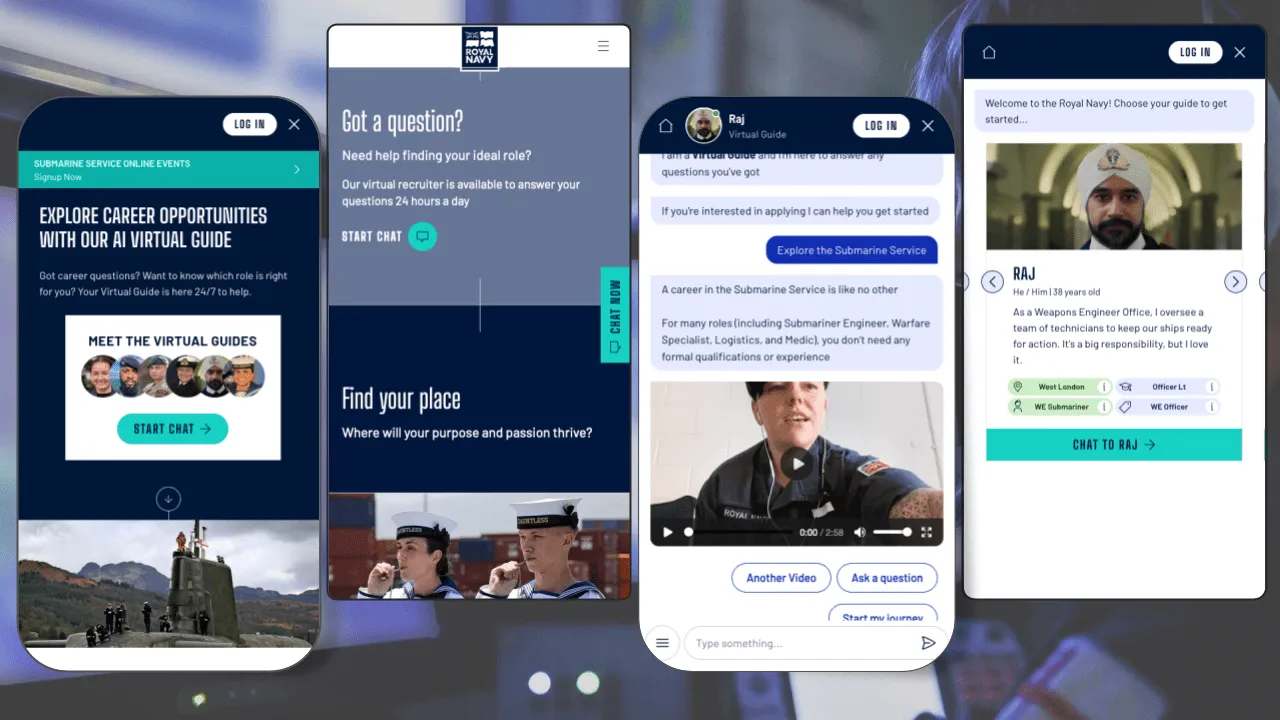
Working with Wavemaker and Great State, Voxly Digital designed and built a conversational AI assistant for the Royal Navy careers website. It launched in March 2023.
The Virtual Recruiter sits right inside the site, so candidates never have to leave the page to get help. It can:
- Guide candidates through more than 100 career paths
- Answer questions about joining, eligibility and life in the Service
- Help with application forms
- Tailor its answers to each person's age, background and interests
Think of it as a careers advisor who has read every page of the website, never needs a tea break and is happy to explain the same thing at 2am.
Why candidates use it
It's personal. The assistant adapts what it says to each candidate, so a school leaver curious about engineering and a graduate weighing up officer training get different, relevant answers.
It's always on. Candidates can explore careers whenever suits them, whether that's a lunch break, a night shift or a Sunday afternoon.
It's judgement-free. Some questions feel awkward to ask a recruiter, from gender-specific issues to cultural or religious considerations. The assistant answers them openly, which supports the Navy's goal of a more diverse workforce.
It scales. It handles huge volumes at once, so peak recruitment periods no longer mean long waits. Human recruiters can focus on complex or sensitive conversations.
It learns. Every conversation shows what candidates care about, giving the Navy real-time insight to sharpen its recruitment marketing.
The results
Since launch, the Virtual Recruiter has cut live chat support by 70%. Candidates get answers faster, and the live chat team spends its time where a human really makes the difference.
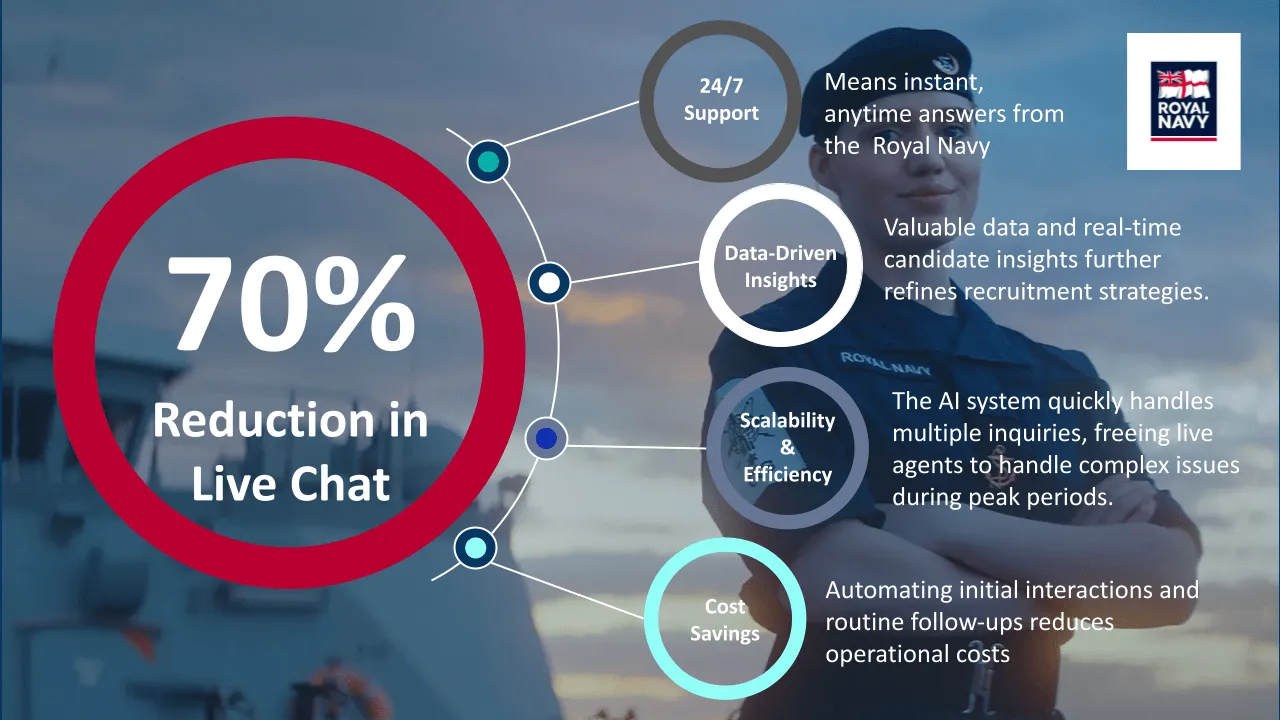
The service kept growing. By 2025, WPP reported that more than 165,000 people had used the guide, asking over 460,000 questions. Conversations averaged around eight minutes, and satisfaction reached 93% after a full large language model was introduced.
Eight minutes is a long time to spend chatting to anything. People were clearly getting what they came for.
What happened next
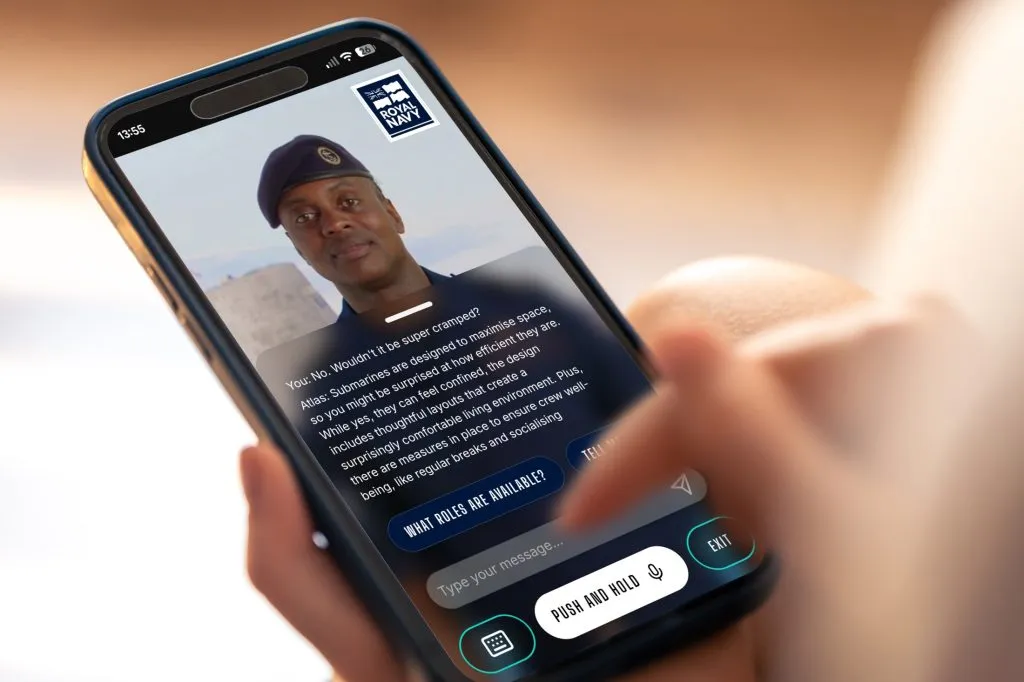
The Virtual Recruiter became the foundation for a wider programme. In 2025 it gained a human face with Atlas, a digital avatar based on a serving submariner. In 2026 the same knowledge moved onto the phone, with a 24/7 AI voice agent for recruitment calls.
Each step built on what candidates had already asked the chatbot. That's the quiet superpower of a good conversational AI service: every conversation makes the next channel smarter.
The takeaway
Recruitment is a long conversation, and most of it happens when your team isn't around. A well-built AI assistant keeps that conversation going, answers the awkward questions and passes the serious candidates to people who can close the deal.
The Royal Navy didn't replace its recruiters. It gave them fewer repetitive chats and better-prepared candidates. For any organisation with a long, complicated sign-up journey, that's a trade worth making.
Got more questions than recruiters to answer them? Talk to Voxly Digital.
Additional links
- Royal Navy recruitment spending jumps by a fifth (PoliticsHome)
- Royal Navy recruitment times (UK Defence Journal)
- Royal Navy careers (Royal Navy)
- WPP and the Royal Navy’s Atlas (WPP)