Client: O2 and NSPCC · Agency: VCCP · Our role: Alexa voice experience · Launched: April 2019
Who knows more about the online world: parents or kids? That's the question at the heart of Parents vs Kids, a family quiz game for Amazon Alexa created for O2 and the NSPCC. Voxly Digital built the voice experience for VCCP, O2's creative agency, turning the smart speaker in the living room into a game show host.
The idea was simple. Get the family together, split into two teams and battle it out over questions about apps, games and life online. Along the way, parents and children would learn from each other and start talking about how to stay safe on the internet.
Why O2 and the NSPCC made a quiz
O2 and the NSPCC have worked together for years to help families keep children safe online. Their research found a real gap between generations when it comes to the internet. Children face more risks online than ever, from inappropriate messages to oversharing, yet many parents aren't talking to their children about what they actually do on their devices.
Most parents feel comfortable managing the risks they can see, like screen time. The harder part is the conversation about what happens on the screen. The challenge was to find a way to start that conversation without it feeling like a lecture.
Why Amazon Alexa?
Smart speakers usually live in shared family spaces like the living room and kitchen. That makes them perfect for a game that brings parents and kids together in the same room, at the same time, talking out loud.
A voice game also puts everyone on a level playing field. Nobody needs to hold a phone or crowd round a screen. Just say "Alexa, play Parents versus Kids" and the game begins.
How the game works
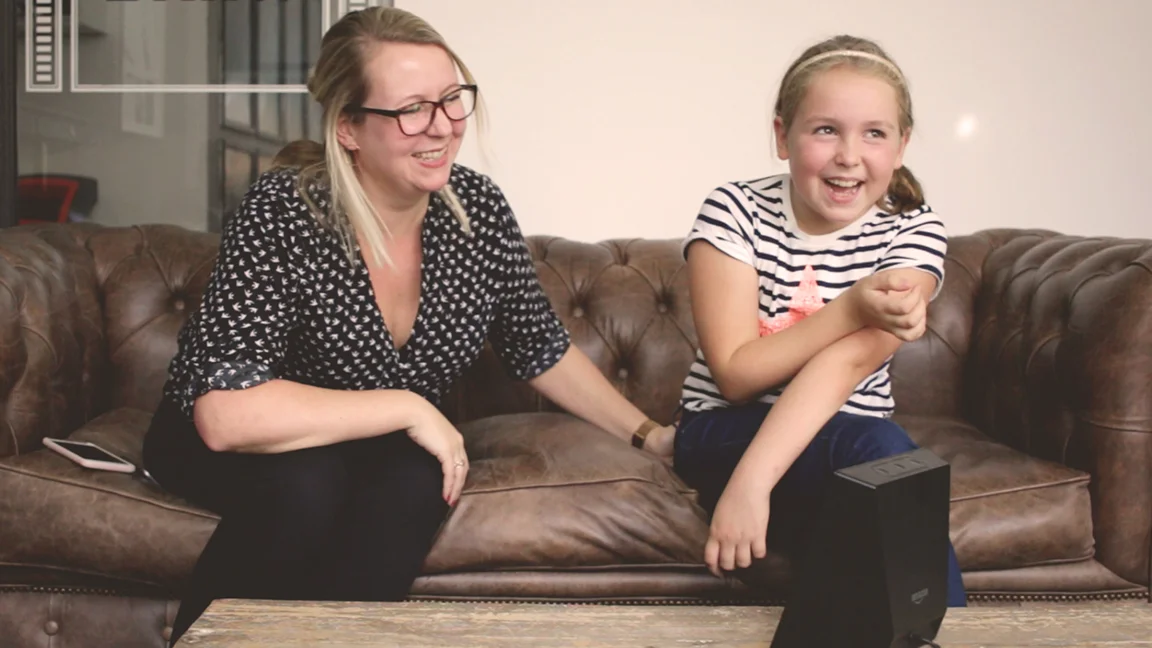
Parents vs Kids is a voice-activated game show. All you need to play is at least one parent, at least one child and an Alexa device.
- Two teams go head to head. Parents take on the kids, taking turns to answer questions about the online world.
- Celebrity hosts. Richard Osman and Lauren Layfield joined Alexa as hosts and team leaders, bringing the energy and humour of a real TV quiz.
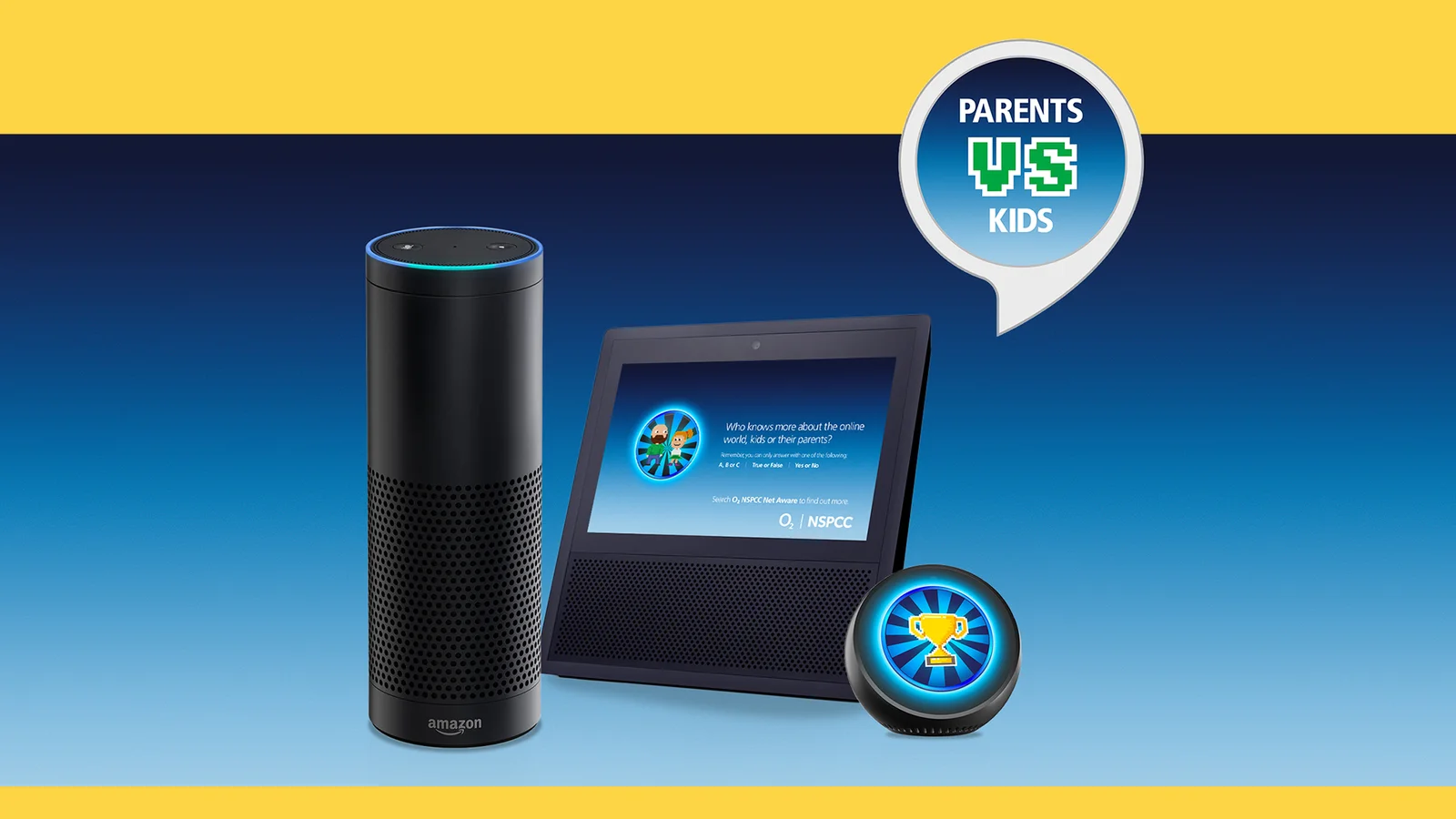
- Built for every Echo device. The game works on voice-only speakers and on Echo devices with screens, where visuals support the questions and scores.
Designing for parents and kids at the same time
Most voice experiences are designed for one type of user. Parents vs Kids had to work for two very different audiences in the same conversation: adults who may not know much about apps and games, and children who know a lot but may still be learning to read. Getting understanding and comprehension right for both was the heart of the build.
Questions everyone can understand
Every question had to make sense to a child and a grown-up hearing it once, out loud. We kept questions short, used everyday language rather than jargon, and read out answer options clearly so players didn't have to remember long lists.
Listening to children's voices
Children don't speak like adults. Their voices are higher, their pronunciation can be less precise and they often answer in their own words. We designed the game to accept the different ways people might say an answer, and to confirm what it heard, so kids weren't caught out by speech recognition.
Clear turns and pacing
With two teams in one room, everyone needs to know whose turn it is. The game signposts each turn, keeps the pace moving and gives players enough time to confer without leaving long silences.
Supporting voice with visuals
On Echo devices with screens, the question and answer options appear on screen as well as being spoken. That helps younger players follow along and gives the whole family something to gather round.
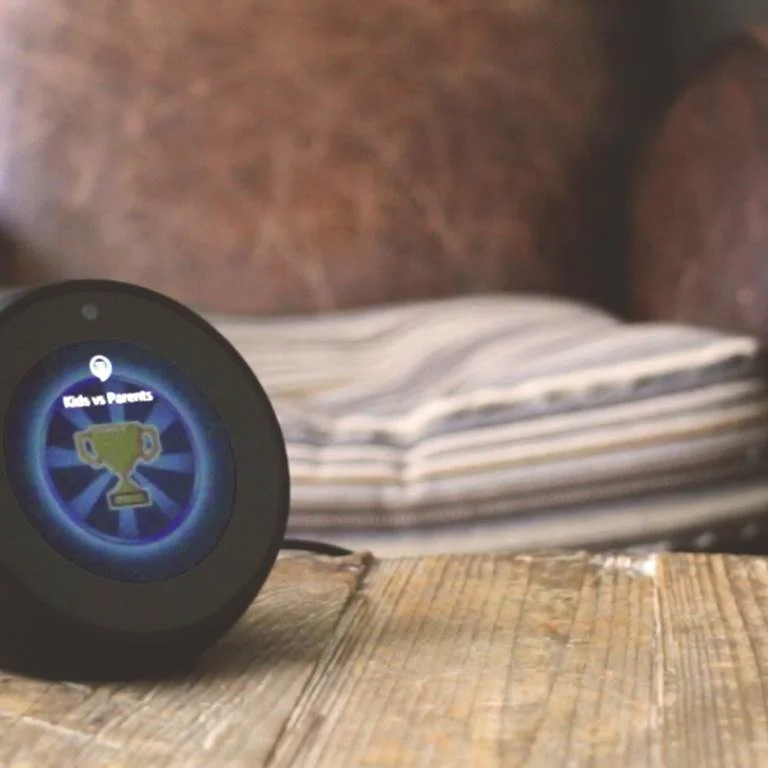
Turning online safety into family fun
Online safety is a serious subject, and it's easy to get the tone wrong. Wrapping it in a light-hearted game show made it approachable. The competition gives families a reason to play, and the questions do the rest, sparking conversations about the online world that might not happen otherwise.
Award-winning work
Parents vs Kids won a 2019 Webby Award in the Apps, Mobile and Voice category for Education & Reference. It also picked up Bronze and People's Choice at the Lovie Awards.

Our role
Voxly Digital designed and built the Alexa voice experience. The wider campaign, including advertising, PR, a web version of the game and an online hub, was created by VCCP for O2 and the NSPCC. You can read more in VCCP's case study.
What brands can learn
- Design for the whole household. Smart speakers are shared devices, so experiences that bring people together play to their strengths.
- Write for the ear. Short, clear questions work for every age. If a child can follow it, so can everyone else.
- Make serious topics approachable. A game can open a conversation that a campaign message alone can't.
Images courtesy of VCCP.
Additional links
- O2 Parents vs Kids (VCCP)