Client: Yoplait (Petits Filous) · Our role: Amazon Alexa voice experience · Market: UK · Launched: 2018
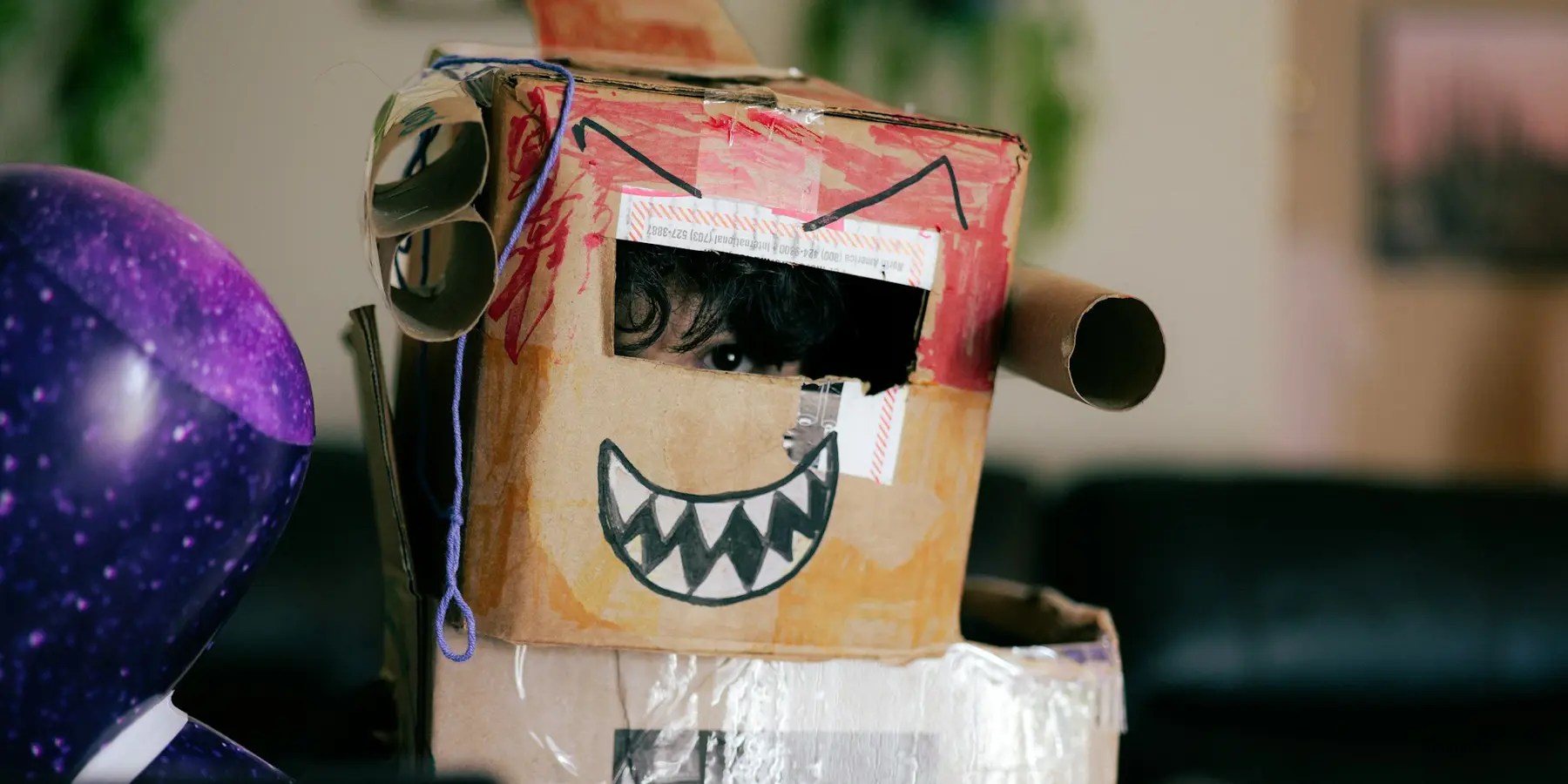
What do you do with an empty delivery box? If you're under seven, you turn it into a rocket. Petits Filous, Yoplait's much-loved kids' fromage frais brand, built a whole campaign around that idea, and Voxly Digital brought it to life on Amazon Alexa.
Bringing play to life
The big theme behind the activity was simple: bring play to life. Petits Filous wanted to get young children playing, imagining and exploring, and to give parents easy ways to make that happen at home.
In 2018, the brand moved its marketing away from its long-running focus on strong bones and towards the idea of "free play": playtime that children start and lead themselves. Free play was backed by a £3 million media investment across the year, with play ideas even printed under the lids of 28 million fromage frais pots.
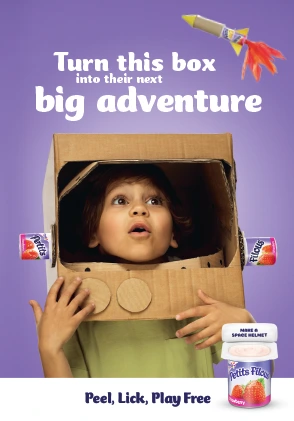
The Alexa experience was one part of that bigger story, designed to spark the same sense of adventure through voice.
Turning a delivery box into a toy
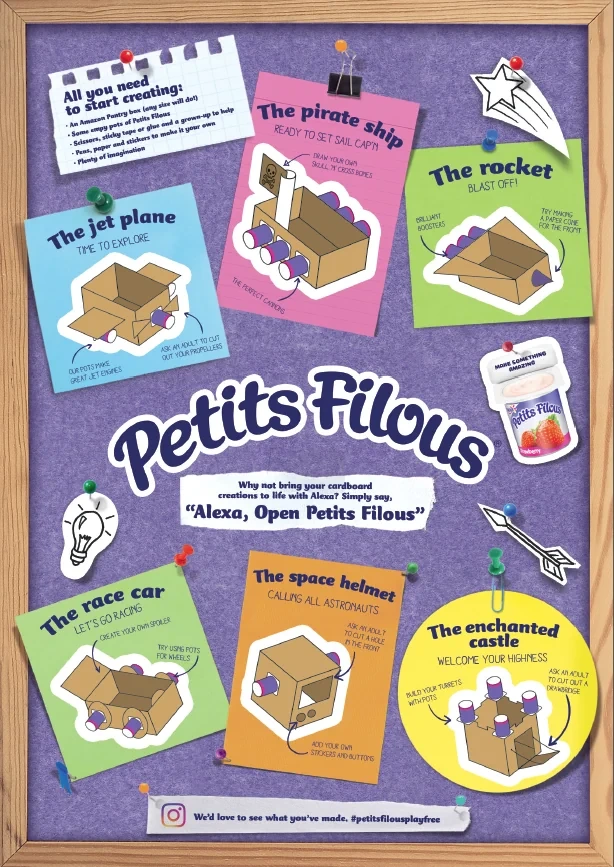
Every child knows the box is often more fun than what came in it. Petits Filous partnered with Amazon to make the most of that. Delivery boxes arrived with play-promoting instructions showing families how to turn the cardboard into something new instead of throwing it away.
The ideas were designed for little ones under seven and included:
- a rocket ready to blast off
- a pirate ship ready to set sail
- a race car
- an enchanted castle
- a jet plane to travel the world
- a space helmet for young astronauts
Alexa as a play companion
Once the box had become a rocket or a pirate ship, Alexa joined in the game. Kids simply said "Alexa, open Petits Filous" to start. Petits Filous Adventures offered six immersive worlds full of stories, mini challenges, music and personalised sound effects, one for each cardboard creation. Whether children had made a rocket, a pirate ship or an enchanted castle, their creation had its own story to play along with.
Rather than telling children what to do, Alexa acted as a play companion: adding atmosphere, setting fun challenges and then letting the child's imagination take over. That fitted the free play idea perfectly. The child stays in charge, and the voice experience makes their creation feel real.
Bring play to life with Amazon Alexa
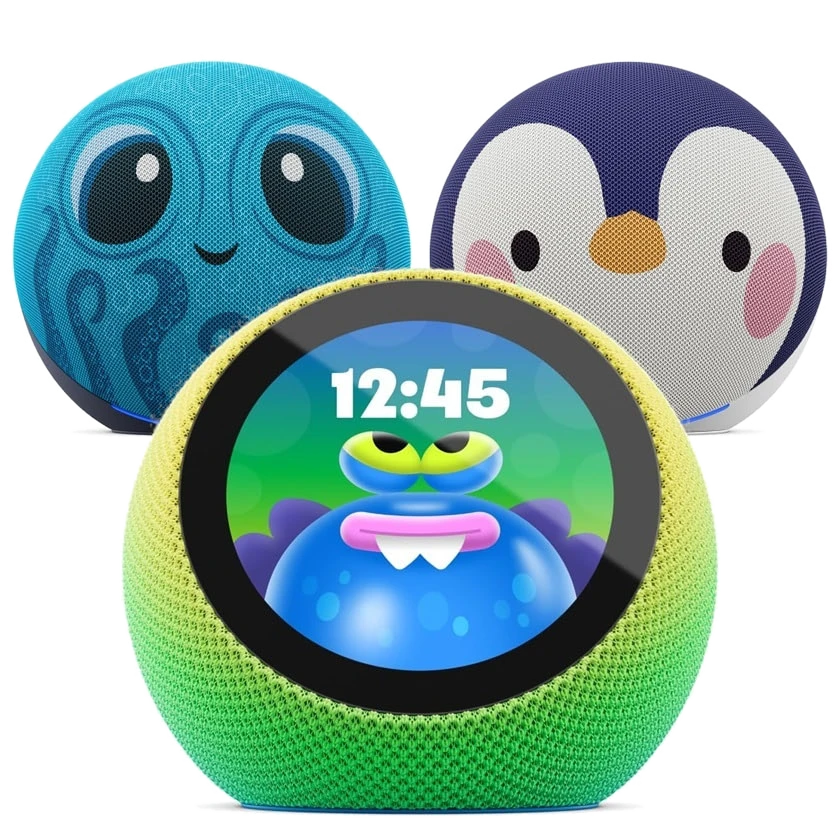
Simply say “Open Petits Filous” and kids can find personalised sound effects, mini challenges and more based on their cardboard creations.
Why Alexa suits young children
For an audience that is still learning to read, voice is the most natural interface there is. Children don't need a screen, a keyboard or an app. They just talk.
Our own research into how UK families use voice assistants backs this up. In our Voxly Voice Insights family survey, we found that:
- 73% of families with a smart speaker use Amazon Alexa.
- Most families keep their smart speaker in shared spaces: 61% use it in the living or family room and 43% in the kitchen.
- Families are most likely to use voice between 6pm and 8pm, the stretch between school and bedtime when play happens.
- 78% of adults said their kids are more confident with new technology than they are.
- 1 in 3 families play games and trivia through voice every day.
Put simply, the smart speaker already sits in the room where children play, and they are happy to talk to it. A voice experience that adds sound and challenges to a cardboard rocket is a natural fit.
Designing voice for little ones
Building for children under seven brings its own challenges. Young voices are higher pitched and less clear than adult voices, and children often answer in their own words. We kept the experience short, simple and forgiving, with clear prompts, plenty of sound and no wrong answers. The goal was to keep children playing, not to test them.
We went on to explore designing for young children in much more depth with Bing Time, our Webby-honoured Alexa skill for preschoolers.
Why free play matters
There's good reason to champion this kind of play. Child development experts describe pretend play, where a box becomes a spaceship or a stick becomes a wand, as an important way for children to build language, problem-solving and creative thinking. Open-ended materials like cardboard boxes are a favourite of early years educators for exactly that reason: they can become anything a child imagines.
By pairing a simple delivery box with a voice experience, Petits Filous gave families a free, screen-light way to play together at home.
What brands can learn
- Start with a purpose. The Alexa experience worked because it was part of a bigger idea: bringing play to life.
- Use what families already have. A delivery box and a smart speaker were already in the home. The campaign simply connected them.
- Let children lead. The best voice experiences for kids support their imagination rather than replacing it.
Sources
- Petits Filous works with Amazon for Play Free push, The Grocer
- Petits Filous partners with Amazon to champion free play, Marcomm News
- Is pretend play the missing ingredient in raising creative kids?, Psychology Today
- When kids like the box more than the toy: the benefits of playing with everyday objects, The Sector
- Alexa is part of the family now, Voxly Voice Insights family survey
Additional links
- Petits Filous works with Amazon for Play Free push (The Grocer)
- Petits Filous partners with Amazon to champion free play (Marcomm News)
- Is pretend play the missing ingredient in raising creative kids? (Psychology Today)
- When kids like the box more than the toy: the benefits of playing with everyday objects (The Sector)